



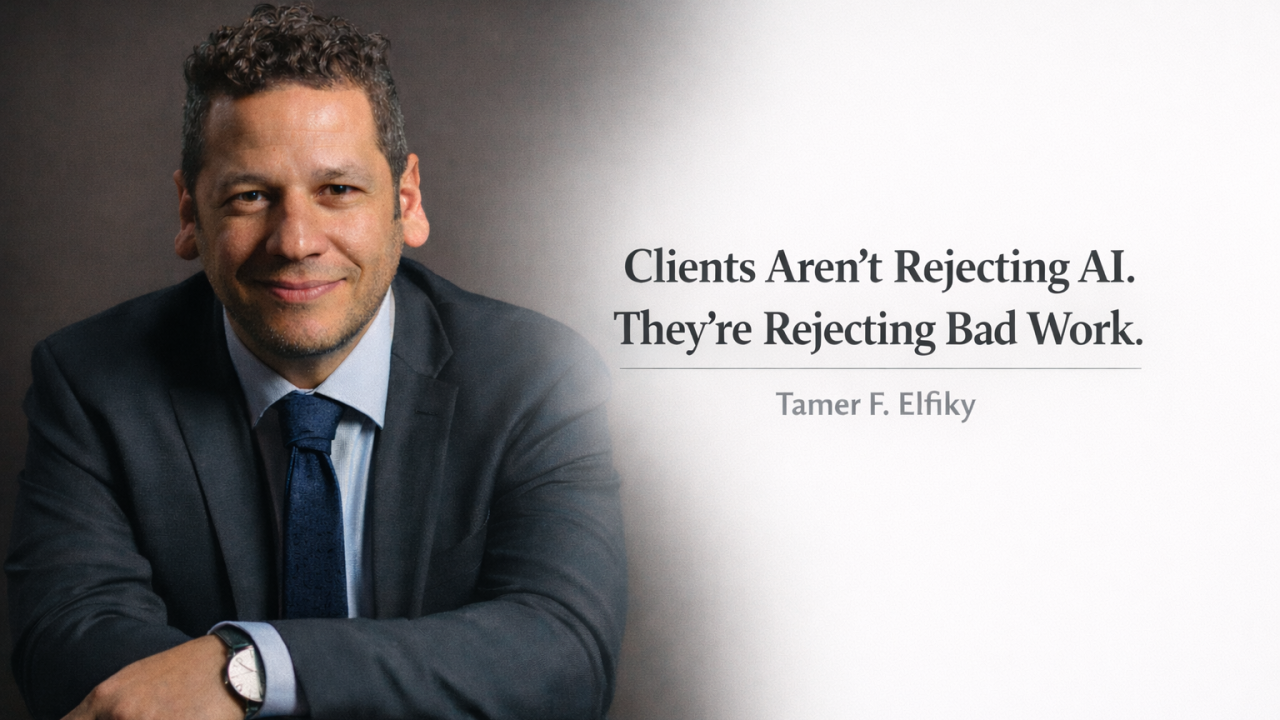
Clients aren’t scared of AI, they’re tired of paying for work that feels generic. Lately, I’ve heard the same request in different rooms:
“Can we not use AI on this?”
Or the more honest version: “We don’t want it to look AI.”
That’s not resistance to technology; That’s frustration with quality.
Because what actually happened over the past year is simple, a lot of teams introduced AI and quietly lowered their standards.
- More options.
- Less thinking.
- Faster output.
- Worse judgment.
The result was work that looks fine, sounds fine, and disappears the moment you scroll past it. And fine is useless.
AI didn’t kill creativity, it exposed how much of the industry was already running on autopilot.
For years, many teams weren’t doing creative work. They were doing safe work.
- Work that gets approved.
- Work that offends no one.
- Work that moves nothing.
AI just made that kind of work cheaper and faster to produce, which means clients started seeing more of it, more often, from more places.
That’s why the pushback is happening.
Not an “AI backlash.” A quality correction.
Clients aren’t saying “NO AI” They’re saying “no more mediocre work justified by technology.”
What’s interesting is that the best AI work doesn’t announce itself. You don’t read it and think, “wow, this is AI.” You think, “this is clear,” or “this actually makes sense.”
Because the teams getting it right aren’t using AI to replace taste. They’re using it to support taste. They do a few unsexy things most teams avoid:
They start with a point of view before opening any tool.
If you don’t know what you believe, AI will happily give you something generic and you’ll mistake it for efficiency.
They use AI to explore, not to decide.
AI can give you directions. It can’t tell you which direction fits your brand, your audience, and your timing.
They edit aggressively.
Most teams paste and publish. Strong teams cut hard and keep only what actually lands.
And they take responsibility.
No hiding behind “the tool.” If it doesn’t work, it’s on them. That’s the real divide forming right now. The teams who use AI loudly will start sounding identical. The teams who use it quietly will start pulling away.
And if AI made your output worse, the problem isn’t the model.
It’s your process. Or your standards. Or your taste.
Probably all three.
The next advantage won’t come from who uses AI the most.
It’ll come from who can still make work that feels human, intentional, and specific.
Because clients aren’t buying effort.
They’re buying judgment.
Why I’m writing this
I write for founders, operators, and marketing leaders who are bored of recycled takes and who actually have to live with the consequences of decisions.
If that sounds like you, you’ll probably want to stick around. (and yes i use ai to aggressively edit, polish and publish these articles)