



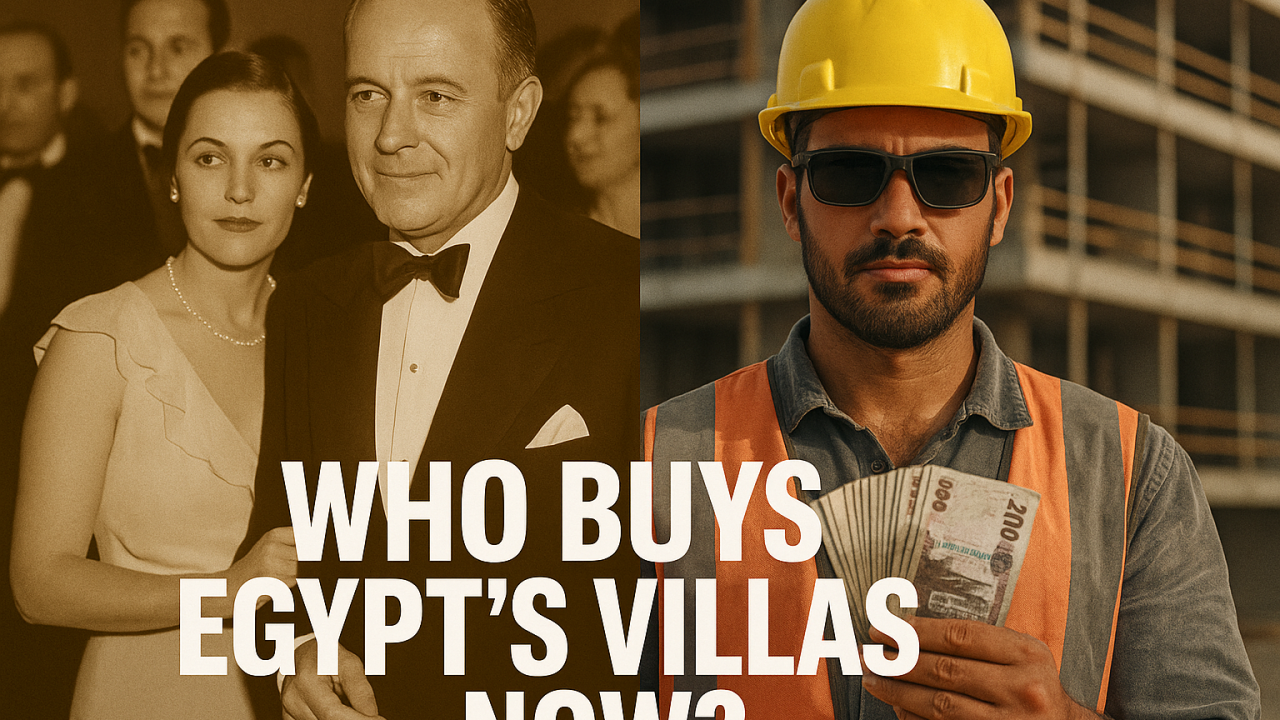
The old guard
For decades, Egypt’s luxury property market was the preserve of a handful of wealthy, traditional families. Bankers, cotton exporters and industrialists – the so‑called “blue bloods” – bought grand villas and penthouse apartments as a way to park generational wealth. These buyers were few in number, moved slowly and prized discretion above all else. Deals were made over dinner at the club, not on social media.
A new class of buyer emerges
In the last ten years, mega‑projects such as the New Administrative Capital, new highways, bridges and rail lines have shifted the centre of economic gravity. A vast network of contractors, suppliers and consultants has sprung up to build these projects – and they’re getting rich. Senior executives at state‑owned enterprises, owners of construction firms and infrastructure specialists have become Egypt’s new millionaires. Instead of reinvesting profits into machinery, they’re turning to high‑end real estate as a hedge against inflation and currency devaluation.
Why the shift?
High inflation and successive devaluations of the Egyptian pound have eroded the value of cash and traditional savings. Real estate, by contrast, has delivered consistent double‑digit returns in both local and hard currency terms. The government’s unprecedented spending on infrastructure has created thousands of cash‑rich entrepreneurs whose fortunes are directly tied to these projects. With limited investment options, buying a luxury flat or villa in New Cairo, 6th of October or the North Coast feels like a safe store of value – and a status symbol.
Implications for developers and marketers
Developers who once targeted the old aristocracy are now dealing with a new breed of buyer: younger, entrepreneurial and willing to pay a premium for immediate delivery. These clients aren’t looking for sprawling estates they’ll pass on to their grandchildren; they want branded residences, penthouses with panoramic views, serviced apartments and trophy villas they can flip or rent. They also expect concierge‑style service and amenities such as private clubs, marinas and wellness centres. Marketing to them isn’t about exclusivity and heritage; it’s about prestige, convenience and quick capital gains.
Key takeaways
- Diversify your audience: The luxury market is no longer defined by a handful of families. Contractors, consultants and state‑enterprise executives represent a large and growing segment.
- Offer flexible payment and delivery: Rapid decision‑makers want units that are ready (or nearly ready) and are willing to pay more for the privilege.
- Sell a lifestyle, not just walls: Position projects around services, experiences and community. Emphasise marinas, clubs, restaurants and wellness rather than square metres alone.
- Protect against inflation: Highlight the role of property as a hedge against inflation and currency risk. Capital preservation is a strong motivator in an uncertain macro environment.
The old guard
For decades, Egypt’s luxury property market was the preserve of a handful of wealthy, traditional families. Bankers, cotton exporters and industrialists – the so‑called “blue bloods” – bought grand villas and penthouse apartments as a way to park generational wealth. These buyers were few in number, moved slowly and prized discretion above all else. Deals were made over dinner at the club, not on social media.
A new class of buyer emerges
In the last ten years, mega‑projects such as the New Administrative Capital, new highways, bridges and rail lines have shifted the centre of economic gravity. A vast network of contractors, suppliers and consultants has sprung up to build these projects – and they’re getting rich. Senior executives at state‑owned enterprises, owners of construction firms and infrastructure specialists have become Egypt’s new millionaires. Instead of reinvesting profits into machinery, they’re turning to high‑end real estate as a hedge against inflation and currency devaluation.
Why the shift?
High inflation and successive devaluations of the Egyptian pound have eroded the value of cash and traditional savings. Real estate, by contrast, has delivered consistent double‑digit returns in both local and hard currency terms. The government’s unprecedented spending on infrastructure has created thousands of cash‑rich entrepreneurs whose fortunes are directly tied to these projects. With limited investment options, buying a luxury flat or villa in New Cairo, 6th of October or the North Coast feels like a safe store of value – and a status symbol.
Implications for developers and marketers
Developers who once targeted the old aristocracy are now dealing with a new breed of buyer: younger, entrepreneurial and willing to pay a premium for immediate delivery. These clients aren’t looking for sprawling estates they’ll pass on to their grandchildren; they want branded residences, penthouses with panoramic views, serviced apartments and trophy villas they can flip or rent. They also expect concierge‑style service and amenities such as private clubs, marinas and wellness centres. Marketing to them isn’t about exclusivity and heritage; it’s about prestige, convenience and quick capital gains.
Key takeaways
- Diversify your audience: The luxury market is no longer defined by a handful of families. Contractors, consultants and state‑enterprise executives represent a large and growing segment.
- Offer flexible payment and delivery: Rapid decision‑makers want units that are ready (or nearly ready) and are willing to pay more for the privilege.
- Sell a lifestyle, not just walls: Position projects around services, experiences and community. Emphasise marinas, clubs, restaurants and wellness rather than square metres alone.
- Protect against inflation: Highlight the role of property as a hedge against inflation and currency risk. Capital preservation is a strong motivator in an uncertain macro environment.
Egypt’s high‑end real estate scene is no longer the private playground of the old elite. Mega‑projects and macro‑economics have minted a new class of buyers who think like entrepreneurs rather than heirs. Developers who understand how to appeal to this group – through product mix, pricing, amenities and marketing tone – stand to capture the next wave of demand.